


Weather events have intensified, strain on the power grid has increased, and infrastructure in many regions is aging faster than it can be repaired. The practical result for commercial and institutional facilities is simple: outages are showing up more often, and they last long enough to interrupt operations, spoil product, and put occupants at risk.
When a facility decides to protect itself, the conversation usually lands on one of two options. A generator creates electricity on site during an outage by burning fuel. A battery energy storage system stores electricity and releases it when the grid goes down, with no combustion involved. Both keep the lights on. They do it in fundamentally different ways, and that difference drives everything else: runtime, maintenance, noise, siting, and whether the investment does anything for you on the 360 days a year the grid is working normally.
This comparison walks through how each option behaves at a commercial site, where each one wins, and how to decide without overbuilding.
Stored Power vs. Generated Power
The cleanest way to frame the decision is to separate storage from generation. A generator provides backup power. A battery system provides backup power and ongoing energy benefits. That single distinction explains most of the tradeoffs that follow.
A generator is a power plant that sits idle until it is needed. It only earns its keep during an outage, plus whatever you spend on exercising and maintaining it so it starts when called. A battery system is an asset that can work every day, shifting when your facility draws from the grid and when it draws from stored energy, then switching to outage protection when the grid fails.
The flip side is duration. If the batteries deplete too quickly, a generator is needed to keep power flowing. Facilities with long outage exposure or heavy continuous loads often discover that a battery alone cannot carry the whole building indefinitely, which is why so many designs pair the two technologies rather than choosing between them.
How Each System Works at a Commercial Facility
Battery Energy Storage
Battery backup systems store electricity for use during outages and offer silent, emission-free operation. Because they provide power without combustion, they eliminate the noise and exhaust that come with fuel-burning equipment, which matters for hotels, healthcare facilities, schools, and any site with neighbors close enough to file complaints.
There is no refueling step. There is no fuel storage to manage, no fuel delivery to schedule, and no risk of a unit that will not start because the fuel degraded or the line was never topped off. A battery system discharges what it holds, and recharges when the grid returns or when paired generation comes online.
Generator Backup
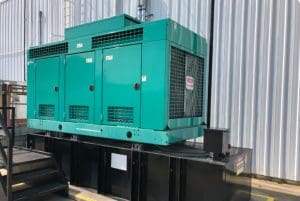
Generators create electricity during an outage and can keep producing as long as fuel is available. That is their core strength. For a grocery store protecting refrigerated inventory or a manufacturing plant that cannot afford an interrupted process, fuel-backed power can run far longer than a reasonably sized battery bank.
The tradeoff is operational. Gas and diesel units are loud, they produce emissions, and they need fuel. With gas, the generator must be stopped for refueling, which means a gap in coverage unless a second unit or a battery buffer covers the transition. Generators also need scheduled testing and maintenance to stay reliable, and that work happens whether or not an outage ever occurs.
Battery Storage vs. Generator Backup: Side-by-Side
| Consideration | Battery Storage | Generator Backup |
|---|---|---|
| How power is produced | Stored electricity released on demand | Electricity generated by burning fuel |
| Noise and emissions | Silent, no combustion at the point of use | Audible operation with combustion exhaust |
| Refueling | Not required | Required; gas units must be stopped to refuel |
| Value between outages | Provides ongoing energy benefits | Provides backup power only |
| Runtime | Limited by stored capacity; a generator is needed if batteries deplete too fast | Limited by fuel supply, but extendable with resupply |
| Maintenance profile | Ongoing system monitoring and service | Regular exercising, servicing, and fuel management |
Note that runtime and capacity numbers are entirely site-specific. A qualified provider should size either option against your actual load profile rather than a rule of thumb.
Where Generator Backup Still Makes Sense
Generators remain the right answer in specific situations. If your facility needs days of continuous power rather than hours, fuel-backed generation is difficult to replace with batteries alone. If your critical load is large and constant, the battery bank required to match it becomes impractical, and a generator becomes the more sensible backbone with storage layered on top for short transitions.
Generators also fit sites that already have fuel infrastructure, or where a unit is already installed and functioning. Replacing working equipment is rarely the best first move. The more common question is whether to add storage alongside it.
Where Battery Storage Pulls Ahead
The case for batteries sharpens when you look beyond the outage itself. Unlike generators, batteries provide power without combustion, eliminating noise and emissions while offering a more environmentally friendly operating profile. For facilities with sustainability commitments, noise ordinances, or exhaust restrictions, that can settle the decision quickly.
The larger advantage is that a battery system earns returns when nothing is wrong. It can be discharged and recharged to reduce what the facility pulls from the grid during expensive periods, and it can integrate with on-site solar to make better use of generation you already produce. A generator cannot do any of that. It waits, and waiting is all it does.
Short-term economics can point the other way. A backup generator can appear more cost-effective than battery storage if you only look at the initial comparison. That view tends to miss the long run, where fuel, maintenance, testing, and the absence of any day-to-day energy benefit change the math. Facilities that evaluate both options over a full lifecycle usually reach a different conclusion than those comparing sticker figures alone.

The Hybrid Approach Deserves Serious Consideration
Businesses seeking both resilience and long-term efficiency may opt for a system that incorporates solar, battery storage, and generator backup. This configuration uses each asset for what it does best: the battery handles short outages and daily energy management silently and instantly, the generator takes over when an outage stretches long enough to exhaust stored capacity, and solar contributes generation on site.
On commercial and institutional sites, the hybrid design also solves the refueling gap. A battery can carry the critical load while a generator is stopped for fuel, so operations do not have to accept a dead window in the middle of an extended event. That is a meaningful difference for facilities where even a few minutes of downtime has real cost.
How to Decide for Your Building
Work through these questions before committing to a technology:
- How long do outages typically last in your area, and how long is the longest one you need to survive? If the answer is measured in days, plan for generation. If it is measured in hours, storage may cover it.
- What is your true critical load? Protecting the whole building is a different project than protecting refrigeration, servers, elevators, or a specific production line.
- Can you site a generator? Fuel storage, exhaust, noise, and local requirements all affect whether a generator is even viable at your location.
- Do you want the investment to do something when the grid is up? If so, storage carries value a generator cannot.
- What does maintenance look like over ten years? Factor in testing, servicing, and fuel handling, not just the equipment.
If you cannot answer these with confidence, that is a sizing problem, not a technology problem. Get a load assessment before you get quotes.
Funding Backup Power Without Upfront Capital
Cost is where most commercial resilience projects stall. Capital budgets are committed elsewhere, and adding debt for backup equipment is a hard sell to ownership.
Onsite Utility Services Capital addresses that constraint through Energy Savings as a Service, a turnkey funding model built around zero upfront capital, no new debt, and full maintenance included. Payments are tied to verified energy savings, so the project is structured to pay for itself rather than compete with other budget priorities. The same model covers lighting, HVAC and power optimization, variable frequency drives, water conservation, solar, benchmarking, and fractional energy management, which means resilience planning can be bundled with efficiency work instead of funded separately.
For a facility weighing battery storage against generator backup, that changes the calculation. The decision can be made on operational fit rather than on which option is easier to write a check for today.
Frequently Asked Questions
How long can a battery system carry a commercial building during an outage?
Runtime depends entirely on the size of the battery bank and the load it is supporting. A system sized for critical circuits will last far longer than one asked to carry an entire building. If the batteries would deplete too quickly for your outage profile, a generator is needed to keep power flowing. Have a provider size the system against your actual load.
Can a generator charge a battery system?
System architectures vary, and configurations exist that use multiple power sources together. The right answer depends on your equipment, your critical load, and how the system is designed and commissioned. Ask the provider designing your system to confirm exactly how charging and transfer will work. Do not assume compatibility between existing equipment and new storage without written confirmation.
Are battery systems quieter than generators?
Yes. Battery backup systems provide power without combustion, which eliminates the engine noise and exhaust associated with fuel-burning generators. That matters for hotels, healthcare facilities, schools, and any site near residences or noise-sensitive areas. Generators can be attenuated, but the mechanical noise source remains, and testing schedules still create periodic disturbance.
Is a generator always cheaper than battery storage?
In the short term, a backup generator can appear more cost-effective than battery storage. That comparison usually ignores fuel, ongoing maintenance, scheduled testing, and the fact that a generator produces no benefit while the grid is up. A battery system can deliver ongoing energy value year round. Evaluate both over a full lifecycle, not on purchase price alone.
Which option is right for a facility that wants both?
Businesses seeking both resilience and long-term efficiency may opt for a system that incorporates solar, battery storage, and generator backup. The battery handles short outages and daily energy management, the generator covers extended events, and solar contributes on-site generation. This hybrid design is often the most practical answer for commercial sites with mixed loads and long exposure.
Whatever direction you take, start with a load assessment and a realistic outage profile, then match the technology to what your building actually needs to keep running.