


Commercial and industrial electricity bills can be divided into charges that track consumption and charges that track capacity. The consumption side measures how many kilowatt-hours you used over the month. The capacity side, often labeled demand, is connected to how much power your facility needed at one moment. A demand charge is usually calculated from the highest average power draw recorded during any 15- or 30-minute interval in the billing period. That means a short burst of simultaneous equipment operation can set the demand level used to calculate the entire month’s charge.
That structure can make demand-related costs feel surprising. Reports from facilities and energy providers show demand charges climbing to 50 percent of total utility cost in some organizations, and industrial demand analysis has placed demand charges at as much as 70 percent of a power bill in heavy-use settings. Reducing those charges does not require dramatic cutbacks in operations. Instead, it requires a close look at how and when the building uses power and what can be done to smooth the highest interval.
What Are Demand Charges and Why Do They Appear on Commercial Bills?
Demand charges are not a penalty. Utilities introduced demand charges so that the costs of maintaining the power system are paid by the customers who require the most from the system. Power plants, substations, transformers, and distribution lines all need to be sized for the moments when demand is highest. A utility cannot build a small system just because average use is low. It must be ready for the period when thousands of customers draw power at the same time.
The demand charge transfers part of that capacity cost onto the bill based on the peak rate of use. Even if two facilities consume the same volume of energy in a month, the one that draws power in a more concentrated pattern can create a larger demand obligation. That is why the demand charge is tied to power draw rather than total energy consumption. Energy use is measured in kilowatt-hours and represents how much electricity was consumed over time. Demand is measured in kilowatts and represents the rate of consumption during the metered interval.
Why Peak Demand Is Difficult to Manage
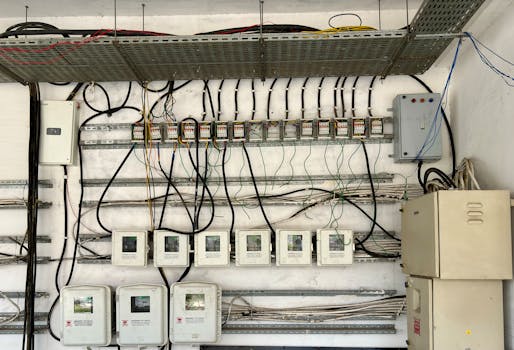
Peak demand is difficult to manage because it is often created by several systems running at the same time. A facility that starts production equipment, cooling systems, and air handling units within the same short window can set a peak that lasts only as long as the combined draw remains elevated. The rest of the day may show moderate usage, but the single spike still establishes the demand charge for the billing period.
Research on commercial buildings confirms that lowering the peak power or reducing the hours that a power threshold is exceeded can drastically reduce demand charges. The same research stresses that dynamic control, efficiency upgrades, and load flexibility are all part of the answer. Even facilities that operate around the clock can act, which means demand reduction is open to nearly every kind of commercial operation.
Demand Charges Reduction Strategies for Commercial Facilities
Demand charge reduction for commercial facilities rarely depends on one expensive fix. Effective plans combine visibility into current usage, changes to equipment schedules, controls that hold loads below a limit, and efficiency work that lowers the building’s overall draw. The steps below address the main reasons demand charges rise.
Assess Your Facility’s Energy Consumption Patterns
Demand management starts with data on the facility’s real behavior. Guides to reducing demand charges routinely list an assessment of the business’s energy consumption patterns as the first action to take. Look for the days and times when power climbs sharply, and identify the systems that are starting or cycling during those intervals. Some facilities discover that their peak arrives at the same time every morning, while others find seasonal weather drives the month’s highest read. Knowing that pattern is the basis for every other strategy.
Run Energy-Draining Equipment Outside Peak Periods
Many energy-intensive loads can be moved to other hours without affecting production or comfort. Facility operators can run energy-draining equipment before the morning startup, after the closing routine, or during periods when the building is otherwise drawing little power. When a load cannot be moved, it can often be split so that half of the equipment operates at a time. The facility still uses the same amount of energy, but the highest 15- or 30-minute average drops because the all-at-once loading has been removed.
Install Demand Charge Limiters and Real-Time Controls
Demand charge limiters are designed to control peak usage by watching the facility’s power draw and preventing it from crossing a preset limit. When the facility approaches that limit, the system temporarily curtails loads that can be interrupted without hurting the operation. Industrial demand control providers design and implement these systems to lower monthly energy costs. Commercial buildings can apply the same principle through building automation systems that manage HVAC equipment, air handling units, and other large loads during the most sensitive minutes of the billing interval.
Combine Efficiency Upgrades with Flexibility Measures
Efficiency measures and flexibility measures work together. Efficiency upgrades reduce the amount of electricity needed to run the same equipment, which lowers the overall load profile that supports the peak. Flexibility measures change when equipment runs or how quickly it is allowed to ramp. A research study focused on commercial facilities found that combining these two approaches can deliver strong demand charge reduction outcomes. Lighting upgrades, HVAC adjustments, and better control sequences are practical places to begin.
Keep Monitoring Demand After Changes Are Made
Demand patterns do not remain the same. New tenants, added production shifts, new equipment, and seasonal changes can all create a new peak. Monitoring the facility’s demand interval after operational changes is an essential follow-up step. When a new peak appears, it takes only a short period of unusually high draw to raise the billing demand for the whole month. Reviewing interval data on a regular basis lets a facility catch a problem before it becomes expensive.
Build a Practical Demand Reduction Plan
Facilities that want a structured approach can group their efforts into a few repeatable actions:
- Identify the exact interval when the facility’s highest power draw occurs each month.
- Shift or stagger high-energy equipment so it does not run in the same interval.
- Add demand limiting controls to large systems that can tolerate short curtailments.
- Complete efficiency upgrades that reduce the baseline load feeding the peak.
- Revisit the plan after equipment changes, schedule changes, or building expansion.
These actions do not need to lower total electricity use to be effective. They lower the amount of capacity the utility must supply during the moments that matter most, which is exactly what the demand charge measures.

Demand Reduction as an Ongoing Operational Practice
Demand charge management is most useful when it becomes part of normal facility operations rather than a one-time project. The facilities that succeed treat their monthly demand data as a performance metric and review the highest interval after every billing cycle. That constant attention makes future peaks easier to prevent, and it gives facility managers a clear way to show how operational changes affect the bottom line.
Another practical option for commercial owners and operators is to bring in an energy services provider that can evaluate the facility, identify demand reduction opportunities, and implement upgrades with little internal disruption. Providers that offer performance-based programs can sometimes tie the cost of upgrades to the verified savings achieved, which is a useful option for organizations that want results without tying up capital in new equipment.
Frequently Asked Questions
These are some of the follow-up questions facility decision-makers ask when demand charges first appear on a commercial utility bill.
How Is a Demand Charge Calculated?
A demand charge is based on the highest average power draw your facility hits during any 15- or 30-minute window in the billing period. That single interval sets the demand value used for the monthly charge. The charge is separate from the total energy consumed, which is measured in kilowatt-hours. Because the interval is short, preventing one spike can produce savings for the entire billing cycle.
Why Does My Demand Charge Seem So High?
Utilities introduced demand charges so the cost of maintaining power plants and the equipment that carries electricity is recovered from customers who require the most from the system. When a facility draws a large amount of power for a short time each month, the utility must keep capacity available for that moment. That reserved capacity is expensive, which is why the demand charge can become a large share of the total bill.
Does Reducing Total Electricity Use Lower My Demand Charge?
Not always. Reducing total electricity consumption lowers the energy portion of the bill, but it may leave the peak interval unchanged. Demand charges are tied to the highest 15- or 30-minute power draw, so savings come from flattening that peak. Commercial demand charge reduction typically requires load shifting, controls, and efficiency work aimed at the specific moments when power use reaches its highest point.
Can a Facility That Operates 24/7 Reduce Demand Charges?
Yes. Even facilities that run around the clock can reduce demand charges. The approach is to identify the interval where power draw is highest, shift loads that can be delayed, and use limiters that prevent power from climbing higher. A 24-hour operation still has equipment cycles that can be managed. Controlling the highest interval directly lowers the demand charge for the month.