


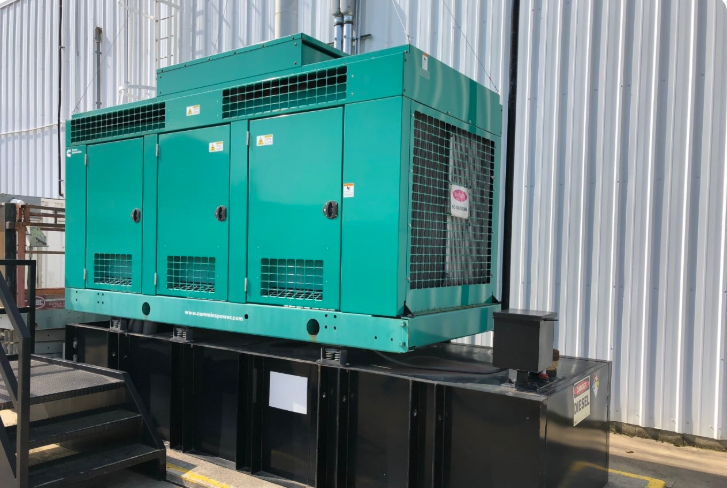
Battery storage has a familiar problem in commercial buildings. The economics can be sound, but the capital has to come from somewhere. A purchase order needs cash, a loan or lease puts debt on the books, and the finance committee asks why the facility should carry the performance risk if the projections do not hold. That is the gap zero capex battery storage financing is built to close.
Managed battery energy storage systems offered as a service are designed to let businesses optimise energy use, reduce costs and enhance grid reliability without an upfront capital investment. The facility gets the hardware and the outcomes. The funding partner carries the capital expenditure. Understanding how that split works, and where the risk actually sits, is what separates a workable arrangement from an expensive one.
What Zero Capex Battery Storage Financing Actually Means
Zero capex does not mean free. It means the capital expenditure sits somewhere other than your balance sheet. In a managed battery storage arrangement, a third party funds the equipment and installation, then recovers that investment over time through the value the system produces and the payments made under the agreement.
Three features usually define the model:
No upfront capital outlay from the facility.
No new debt obligation on the facility’s books, because the asset is owned by the provider rather than financed by the customer.
Ongoing maintenance and performance obligations that stay with the provider rather than the site team.
That last point matters more than it first appears. A battery system that is installed and then left alone drifts. Value comes from how the asset is operated over years, not from the day it is switched on.
Why Battery Storage Has Been Difficult to Finance
Traditionally, a business that wanted energy storage borrowed money. Banks, credit unions and specialised lenders offer loans and leases for energy storage systems, and those can work well when the numbers are clear and the borrower is comfortable with the debt.
At utility scale, the financing market has matured quickly. Northland Power has closed financing on two large-scale battery energy storage system projects in Poland. Greenflash Infrastructure closed a hybrid tax capital and debt financing package for Project Soho, a 400MW/800MWh standalone battery storage project. In Germany, lenders have become increasingly willing to back large-scale BESS projects that have no contracted revenues at all.
None of that reaches a mid-sized commercial site. Those deals work because the projects are large enough to justify the diligence, and because the financing case rests on whether operating assumptions, contracts and physical limits tell the same story. A single facility is rarely big enough to support that structure, and it is rarely willing to take on the debt even when a lender is interested. The result is a familiar pattern: the project is technically sound, financially sensible in theory, and permanently stuck at the approval stage.

How a Managed Battery Storage Model Works
The provider funds and owns the asset
Under a managed service, the provider or its funding partner purchases the battery system and covers installation. The facility does not issue a purchase order for the hardware and does not take on a loan to pay for it. Ownership sits with the provider for the term, which is what allows capital to be raised against the asset rather than against the customer’s credit.
Payments are connected to verified performance
The commercial logic of these agreements is that payments are tied to verified results rather than to a fixed equipment charge. That is the structural difference between buying a battery and subscribing to one. When savings are verified rather than estimated, the provider has a direct incentive to operate the system properly, because its revenue depends on the system continuing to perform. The same principle sits behind energy savings as a service models used across lighting, HVAC and power optimisation projects.
Maintenance stays with the provider
Full maintenance included is not a small line item. Battery systems involve controls, monitoring and periodic attention. In a zero capex arrangement, that responsibility belongs to the party that owns the asset. The facility team is not asked to become a storage operator on top of everything else on its list.
Performance is tracked continuously
Benchmarking and performance tracking turn an agreement into something measurable. Without monitoring there is no way to confirm that savings are real, and no way to resolve a disagreement if they are not. Ask any provider how performance is measured, who sees the data, and how often it is reported. If those answers are vague, the savings projection is doing more work than it should.
Financing Structures Compared
There is more than one way to fund a storage system, and they suit very different situations. The table below outlines the broad structures in use today.
Structure | Who provides the capital | Where it fits |
|---|---|---|
Bank loan or lease | The facility borrows from a bank, credit union or specialised lender | Works when the site is comfortable adding debt and cash flows are predictable |
Tax credit transfer financing | Investors fund the project against transferable tax credits | Common on large projects. Foss & Company and Plus Power closed a $100 million battery storage deal using a transferable tax credit structure |
Managed battery storage as a service | The provider or its funding partner | Suited to facilities that want the outcome without capital or debt on their own books |
Tax rules and incentive eligibility vary by jurisdiction and by project. Confirm the treatment of any structure with your own tax and accounting advisers before signing.

Questions to Ask Before Signing
A zero capex agreement still deserves scrutiny. The capital risk has moved, but the operational and contractual details have not disappeared.
How are savings measured, verified and reported, and by whom?
Who owns the system during the term and what happens at the end of it?
What happens if performance falls short of the projection?
Who handles maintenance, and what response commitments apply?
Does the agreement create any debt or capital lease obligation under accounting rules?
What data will the site receive, and how frequently?
What happens if the facility changes ownership or usage during the term?
Storage Alongside Other Efficiency Upgrades
Battery storage rarely makes sense in isolation. Its value depends on the load profile of the building around it, which means the cheapest improvements are often the ones that shrink and smooth that load first. Commercial lighting retrofits, HVAC efficiency work, power optimisation including voltage optimisation and variable frequency drives, and water conservation measures all change the demand profile a storage system will operate against.
Solar generation is another natural pairing, since on-site generation and storage together change when a facility draws from the grid and when it does not. Sequencing matters. A facility that reduces consumption first tends to get more from a smaller storage system, which keeps the funded amount lower and the economics tighter.
Why This Model Suits Medium Sized Commercial Facilities
Large energy users can access project finance, and they do. Small sites can sometimes justify a straightforward equipment purchase. The middle is where capital tends to stall: buildings, grocery stores, hotels, manufacturing plants, schools, municipalities and healthcare facilities with real energy costs and limited appetite for new debt.
Zero capex battery storage financing is designed for exactly that profile. The facility gets funded equipment, ongoing maintenance and verified performance reporting. The provider carries the capital and the operational responsibility. For a business that has spent years deferring efficiency projects because the budget never lined up, that shift is often the difference between a plan on a shelf and a system on the wall.
Frequently Asked Questions
Is zero capex battery storage really free?
No. Zero capex means the facility does not fund the equipment or take on debt for it. The provider or its funding partner carries the capital and recovers it over the term through the agreement’s payments and the value the system produces. You should still expect a contractual commitment, and you should understand exactly how payments are calculated before signing.
Who owns the battery system during the agreement?
In a managed as-a-service arrangement, ownership typically sits with the provider for the term, which is what allows the capital to be raised against the asset rather than the customer’s balance sheet. Ownership transfer, renewal options and end-of-term removal should all be spelled out in writing. Ask for those terms in the contract before you commit.
What happens if the projected savings do not materialise?
That depends entirely on the contract. Models built around verified savings shift performance risk toward the provider, because payments follow results rather than a flat equipment charge. Ask how shortfalls are handled, who bears the cost if the system underperforms, and what remedies apply. Get the answer in writing rather than in a sales conversation.
Does a battery storage agreement create debt?
The intent of these structures is to avoid new debt on the facility’s books, since the asset is owned by the provider. Accounting treatment still depends on the specific terms of the agreement, and rules differ by jurisdiction. Have your own accountant or adviser review the contract and confirm how it will be classified before you sign.